
 EN
EN
Mooring Winch Safety: Essential Protections for Maritime Excellence
Mooring operations represent some of the most complex, high-stakes tasks within the global maritime industry. Every time a massive vessel approaches a berth, the integrity and reliability of the mooring winch system dictate the safety of the entire crew, the protection of cargo, and the preservation of port infrastructure. Standard mooring winches, serving as the mechanical workhorses of deck operations, require specific, high-performance safety protection devices to mitigate the inherent risks of high-tension mooring maneuvers. Drawing from decades of engineering field experience, site inspections of various deck layouts, and detailed analysis of operational safety reports, it is clear that safety is a foundational engineering requirement that must be prioritized during the design and integration phases.
The Role of Fail-safe Braking Systems
At the heart of every winch safety protocol lies the braking mechanism. A truly reliable mooring winch must be equipped with a high-capacity, spring-applied failsafe brake. In practical field applications, unexpected power failures, electrical surges, or control signal interruptions can occur without a moment’s notice. A brake system that automatically engages the moment power is lost acts as an essential buffer against catastrophic line slippage or drum runaway. Beyond this automated safety aspect, manual band or disc brakes must be meticulously engineered to provide the precise tension control necessary for berthing. Experienced maritime engineers and maintenance teams prioritize regular torque testing and brake pad inspections to ensure these systems remain within the vessel’s certified Safe Working Load (SWL) parameters, thereby preventing the metal fatigue and component wear that often lead to equipment failure.
Emergency Response and Power Isolation
The ability to halt massive rotating machinery instantly is the ultimate safeguard against accidents involving snagged lines or personnel entanglement. Every professional-grade mooring winch installation demands a comprehensive and redundant Emergency Stop (E-Stop) system. These vital control points should be strategically distributed across all primary operating stations, including local controls and remote bridge consoles, to guarantee that a stop signal can be initiated from multiple vantage points instantly. Industry standards and classification society guidelines consistently emphasize that E-Stop circuits must be hard-wired and kept entirely independent of the main programmable logic controllers. This ensures that even in the event of a complex software glitch or communication failure, the physical power supply to the drive motor can be severed immediately, bringing the drum to a dead stop.
Load Monitoring and Overload Protection
The modern maritime landscape is shifting rapidly toward data-driven safety. Integrating sophisticated load monitoring sensors directly into the winch system architecture allows deck officers to monitor the real-time tension exerted on mooring lines. This technology serves as an intelligent, proactive preventive measure rather than a reactive one. When tension readings approach the winch’s rated load capacity, the system should automatically trigger high-decibel audible alarms and bright visual warnings. This proactive capability allows the deck crew to adjust the vessel's positioning or safely deploy additional lines long before a dangerous snap-back event occurs. Relying on accurate, real-time load data not only preserves the structural integrity of synthetic or wire ropes but also significantly reduces the mechanical stress placed on the winch’s gearbox and structural frame.
Enhancing Crew Safety Through Remote Operation
One of the most effective strategies to manage maritime risk is to minimize the physical presence of personnel within designated snap-back zones during high-tension operations. Modern remote control technology has revolutionized deck safety by allowing operators to manage winches from a protected, elevated, and safe position. When this remote capability is combined with integrated high-definition CCTV monitoring, this separation ensures that the operator has a clear, panoramic line of sight of the mooring area without being directly exposed to the massive dynamic energy of the tensioned lines. This design philosophy aligns perfectly with current international maritime standards for "human-centered" deck layouts, which seek to eliminate human error by providing clear, safe vantage points during the high-stress procedures associated with berthing.
Physical Safeguards and Environmental Durability
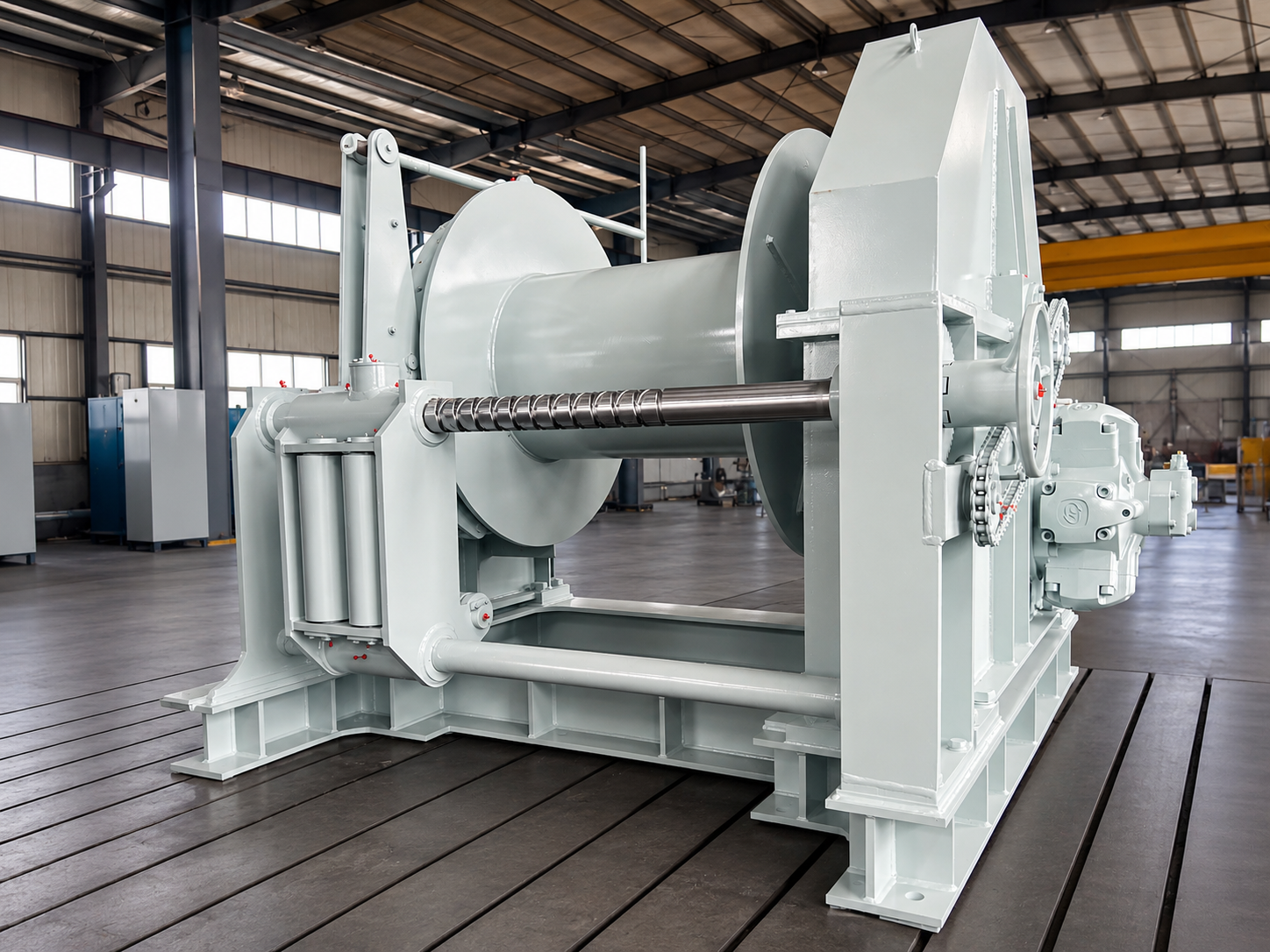
It is easy to underestimate the importance of robust mechanical guards, but they remain the final, essential line of defense against workplace injury. All exposed, high-speed rotating elements—including gears, drive shafts, and drum ends—must be encased in high-strength, durable protective housings. These physical guards prevent loose clothing, maintenance tools, or fingers from being accidentally pulled into the rotating mechanism. Furthermore, maritime environments are notoriously harsh, involving constant salt spray, extreme humidity, and fluctuating temperatures. Wavehigh designs these protective enclosures with advanced, high-performance, corrosion-resistant coatings, ensuring that safety guards remain intact, functional, and aesthetically professional despite constant exposure to the ocean environment. Reliability in extreme, corrosive conditions is a hallmark of professional-grade manufacturing and design excellence.
Commitment to Engineering Integrity and Supply Chain Control
Ensuring that every single component of a mooring winch meets international quality standards requires a manufacturing partner with deep, practical expertise in maritime logistics and heavy-duty mechanical engineering. Wavehigh utilizes a vertical integration strategy, meticulously overseeing the entire process from initial design and material procurement to precision manufacturing and rigorous, real-world stress testing of critical winch components. By maintaining total control over the manufacturing supply chain, Wavehigh provides vessel operators with deck equipment that consistently meets the stringent safety benchmarks established by major maritime classification societies. For fleet managers, naval architects, and shipowners looking to standardize their critical deck equipment, partnering with an experienced manufacturer that prioritizes technical innovation, rigorous safety, and long-term durability is the most effective way to ensure operational safety while significantly minimizing total lifecycle costs.